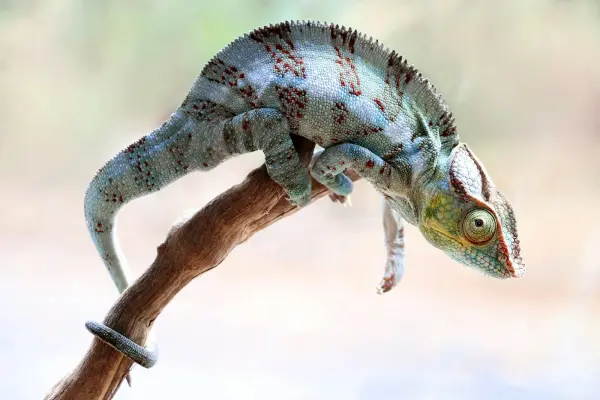
Panther Chameleon – Nosy Be
The famous 'true blue' panther chameleon — males glow solid turquoise-blue, making the Nosy Be locale one of the most sought-after chameleons in the hobby.
$449.00intermediate
Live Arrival Guarantee on every animal · Supplies ship worldwide
Trioceros jacksonii xantholophus
$199.00
A captive-bred Jackson's chameleon: the three-horned 'mini triceratops' chameleon from East Africa. Bright green and endlessly fascinating.
In stock — ready to ship
Live animal notice
Ships overnight Monday–Wednesday within the US, only when weather along the route is safe. Shipping depends on your local laws; at checkout you'll confirm that you are 18+ and agree to our Live Animal Policy.
SKU: LR-CH-JACK
The Jackson's chameleon (Trioceros jacksonii xantholophus) is the iconic three-horned chameleon, often called a "mini triceratops". Males carry three long horns; females have smaller or no horns. Jackson's chameleons are bright green, give birth to live young instead of laying eggs, and come from cool, misty highlands in East Africa, so they prefer milder temperatures than veiled or panther chameleons. Our Jackson's chameleons for sale are captive bred in the US.
Chameleons need airflow. An adult needs a screen chameleon cage of 24×24×48 in or a hybrid enclosure, packed with live plants such as pothos and ficus, horizontal branches at different heights and a dripper.
Chameleons don't drink from bowls. Mist 2–3 times a day and run a dripper so they can lap water droplets from leaves; an automatic misting system makes this easy.
Feed gut-loaded crickets, dubia roaches, black soldier fly larvae and silkworms. Juveniles eat daily; adults every other day. Dust with calcium and use a multivitamin twice a month.
They are best for keepers with some chameleon or reptile experience. They need cooler temperatures, a night drop and frequent misting.
No. They are ovoviviparous: females give birth to 8–30 live babies after a pregnancy of about 5–6 months.
Female xantholophus usually have no horns or small nubs, while males have three prominent horns.
Captive-bred Jackson's chameleons usually cost $150–$300.
| Scientific name | Trioceros jacksonii xantholophus |
|---|---|
| Care level | advanced |
| Adult size | 9–13 in (23–33 cm) |
| Lifespan | 5–10 years |
| Diet | Gut-loaded insects dusted with calcium |
| Temperature | Basking 80–85°F (27–29°C), ambient 70–78°F, night 55–65°F |
| Humidity | 50–80% |
No reviews yet. Reviews come from verified buyers only.
The famous 'true blue' panther chameleon — males glow solid turquoise-blue, making the Nosy Be locale one of the most sought-after chameleons in the hobby.
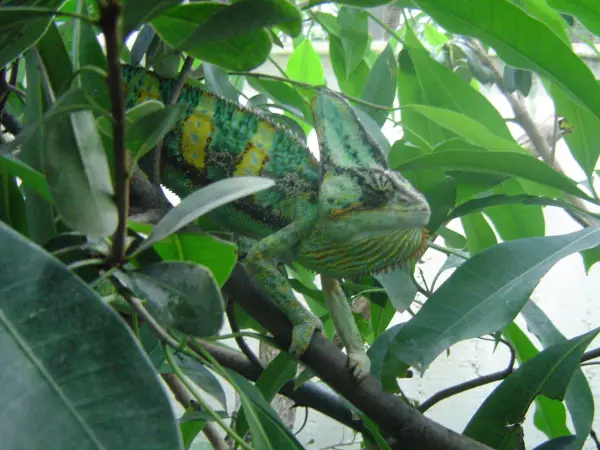
Male veiled chameleon with a tall casque and green, yellow and blue banding.
A hardy African chameleon named for the large skin flaps on its neck — an adaptable, characterful species that does well in a planted screen enclosure.
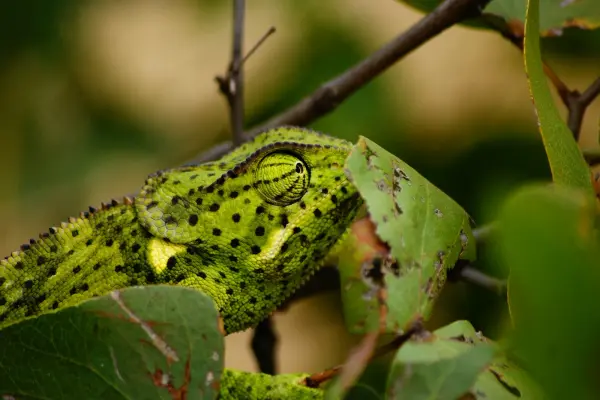
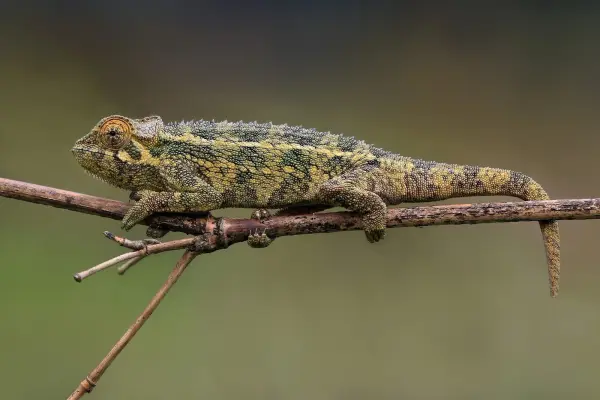
A small, hardy mountain chameleon from East Africa with a rough, textured casque — a cool-climate species for experienced keepers with a humid, planted setup.
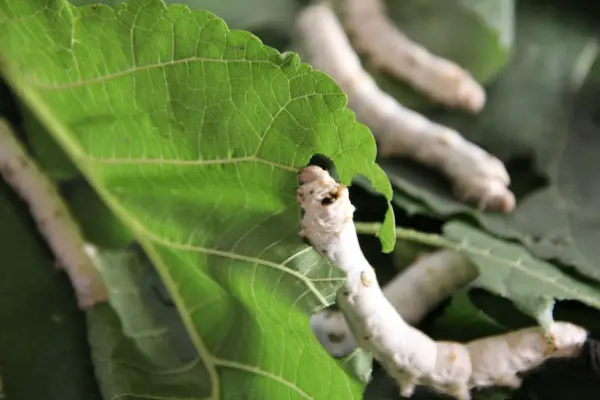
Fifty live silkworms with silkworm chow. Soft, low-fat, high-protein feeders that are easy to digest. Great for chameleons and geckos.
Programmable misting system with two nozzles and a 1.5 L reservoir for chameleons and tropical setups.
A 2.5 L ultrasonic reptile fogger with adjustable output and a flexible hose. Raises humidity for tropical setups and shedding.
Twenty-five live hornworms in a cup with food included. Juicy, soft-bodied feeders that tempt picky eaters and add hydration.