Reptile Heating Guide: Basking Spots, Thermostats and Safety
How to heat a reptile enclosure safely, covering temperature gradients, basking bulbs, ceramic emitters and heat mats, plus which thermostat to pair with each.
- By ScaleHaven Care Team
- Published
- 5 min read
Reptiles are ectotherms: they rely on their environment to control their body temperature. Heat affects everything from digestion and immune function to activity levels and mood. A good heating setup gives your reptile a range of temperatures to choose from, keeps those temperatures stable day after day, and never puts your animal or your home at risk.
The temperature gradient
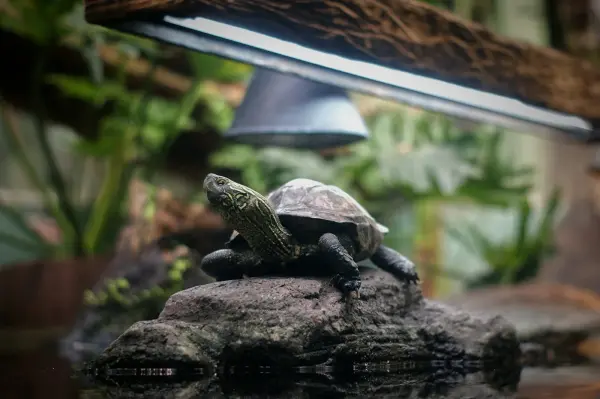
Instead of one temperature, your enclosure needs a gradient: a hot basking spot at one end, a cooler area at the other, and everything in between. Your reptile moves around to warm up after a cool night, digest a meal or cool down when it's had enough.
To create a gradient:
- Put all heat sources at one end of the enclosure.
- Place hides at both the warm and cool ends, so the reptile never has to choose between security and the right temperature.
- Measure the basking surface, the warm-side air and the cool side separately.
| Species | Basking surface | Cool side |
|---|---|---|
| Bearded dragon | 100–110°F (38–43°C) | 75–85°F (24–29°C) |
| Leopard gecko | 88–92°F (31–33°C) | 72–78°F (22–26°C) |
| Ball python | 88–92°F (31–33°C) | 76–80°F (24–27°C) |
| Corn snake | 85–90°F (29–32°C) | 70–75°F (21–24°C) |
| Crested gecko | Room temperature, 72–78°F (22–26°C), no hot spot needed | 65–72°F (18–22°C) at night |
Heat sources compared
Halogen basking bulbs
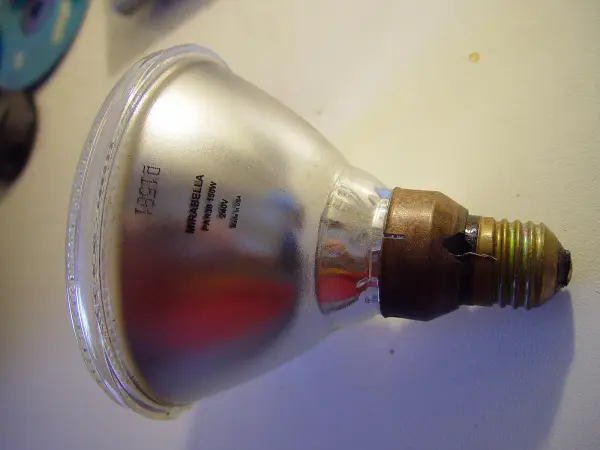
Halogen flood bulbs produce bright light and infrared heat that penetrates the skin and warms the body, much like sunlight. They're the best basking heat source for day-active lizards. Use a 100 W halogen basking bulb for large desert setups, or a 50 W for smaller enclosures, in a deep dome lamp fixture with a ceramic socket.
Pair with: a dimming thermostat.
Ceramic heat emitters (CHE)
A ceramic heat emitter screws into a lamp socket like a bulb but gives off heat with no light. That makes it useful at night, when your home gets too cold, or for nocturnal species. CHEs get extremely hot, so always use a ceramic socket and a guard.
Pair with: an on/off or proportional thermostat.
Deep heat projectors and radiant heat panels
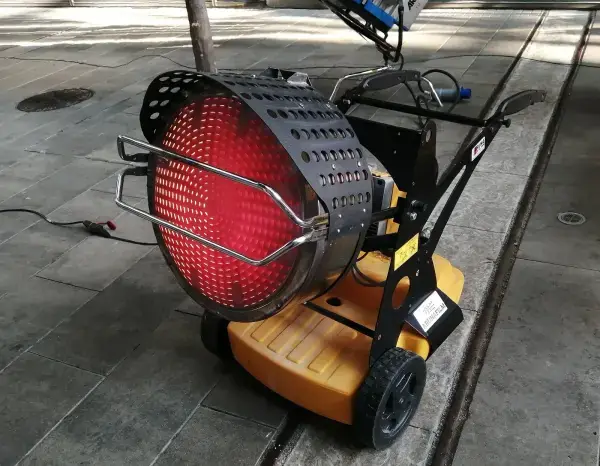
These produce infrared heat with little or no visible light. They warm a large area evenly, making them popular for snakes and in PVC enclosures. Radiant heat panels mount flat to the ceiling and are hard for animals to touch.
Pair with: a proportional thermostat.
Under-tank heat mats
Heat mats stick under the enclosure floor and provide gentle belly heat. They're useful as a supplement, but they don't warm the air much and can create dangerously hot spots if the substrate is thin or the thermostat fails. They aren't a good main heat source for large enclosures.
Pair with: an on/off or proportional thermostat, with the probe on the floor directly above the mat.
Heat sources to avoid
- Heat rocks: they often develop dangerous hot spots and cause burns.
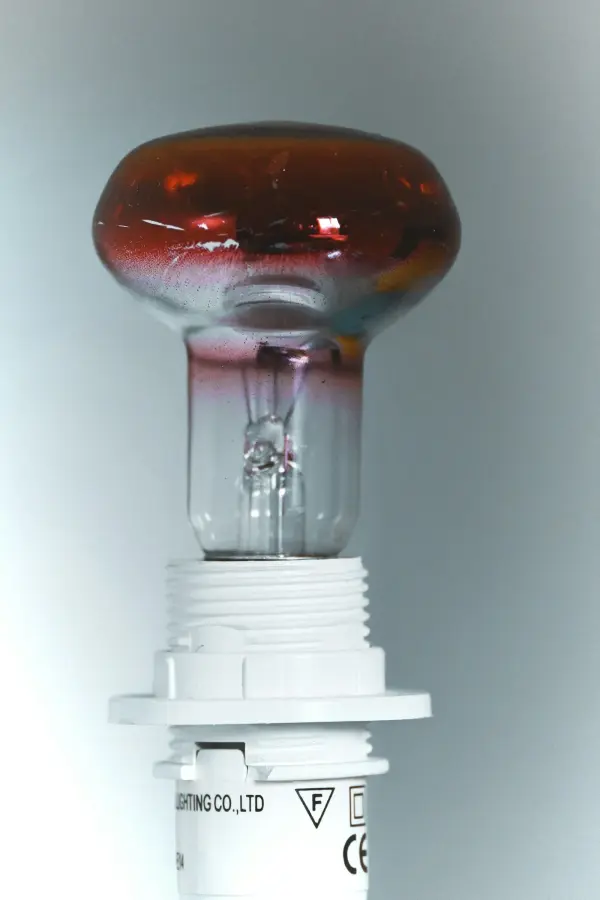
- Colored "night" bulbs: red, blue and purple bulbs disturb sleep. Use a CHE or heat panel for night heat instead.
- Unregulated heat: any heat source without a thermostat.
Choosing a thermostat
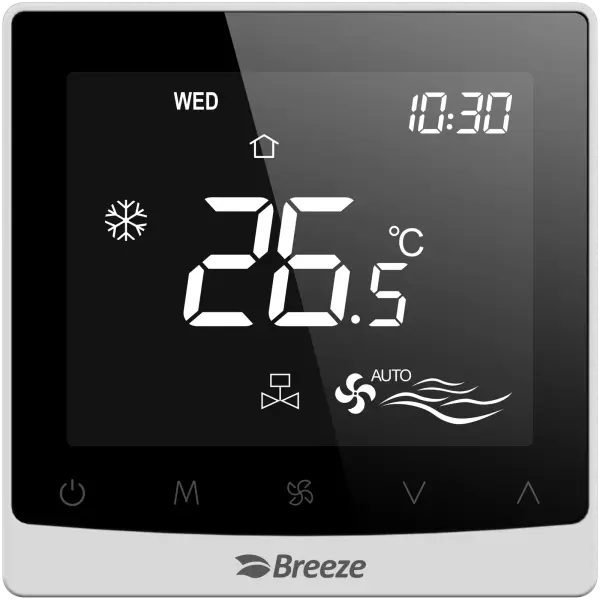
A thermostat is the most important safety device in your setup. It switches or dims your heat source to hold the temperature you set.
| Thermostat | How it works | Best for |
|---|---|---|
| On/off | Switches power fully on or off at the set point | Heat mats, CHEs |
| Dimming | Lowers the power smoothly so a bulb glows dimmer instead of flickering | Halogen and incandescent bulbs |
| Proportional (pulse) | Rapidly pulses power to hold a very steady temperature | CHEs, radiant panels, deep heat projectors, heat mats |
A dimming thermostat is the right choice for basking bulbs. For non-light heaters, a proportional thermostat gives the steadiest temperatures. Many keepers use a thermostat with a day/night setting, so temperatures drop naturally after dark.
Probe placement
Place the thermostat probe where it measures the temperature you're trying to control:
- Basking bulbs: at the basking spot, or just to the side of it so the bulb's light doesn't hit the probe directly.
- Heat mats: on the floor directly above the mat.
- Night heaters: on the warm side, at the height the animal rests.
Secure the probe so your reptile can't move it. A loose probe resting somewhere cool will make the thermostat overheat the enclosure.
Measuring temperatures
Use two tools:
- A digital probe thermometer for air temperatures on the warm and cool sides.
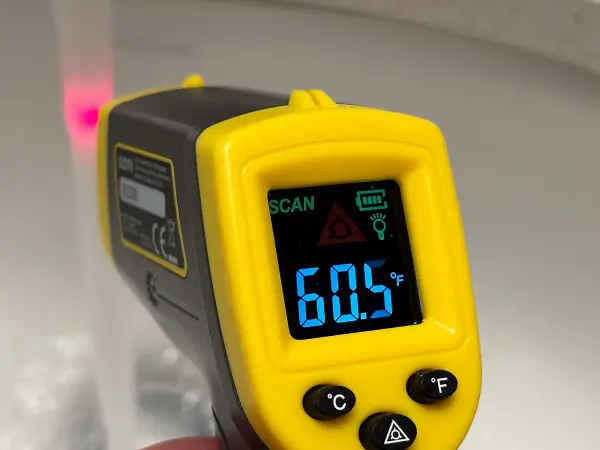
- An infrared temperature gun for surface temperatures, especially the basking spot.
Stick-on dial thermometers are often off by several degrees. Check temperatures at different times of day for the first week, and again whenever the season changes.
Safety checklist
- Every heat source runs through a thermostat.
- Bulbs are in ceramic-socket fixtures rated for their wattage.
- Bulbs and emitters are outside the enclosure, or behind a guard the reptile can't reach.
- Fixtures are secured so they can't fall onto mesh or substrate.
- Cords are tidy and away from water.
- A smoke alarm works in the room.
- You have a spare bulb and know how to tell when a heat source fails.
Heat works together with light. Once your heat is set up, read UVB lighting explained to add the right UVB, and see our humidity guide, because heating can dry the air.
Frequently asked questions
Does my reptile need heat at night?
Most reptiles do well with a natural temperature drop at night, often to about 65–75°F (18–24°C), depending on the species. Only add night heat if your room gets colder than your species' minimum, and use a heat source with no light, such as a ceramic heat emitter.
What kind of thermostat do I need for a heat bulb?
Use a dimming thermostat for heat bulbs. It smoothly reduces the power, so the light doesn't flicker on and off the way it would with an on/off thermostat.
Are heat mats safe for reptiles?
Heat mats can be safe when they're controlled by a thermostat with the probe directly above the mat. Without a thermostat they can reach temperatures that burn. For most lizards, overhead heat is a better main heat source.
Why is my basking spot not hot enough?
Common causes are a bulb that's too low in wattage, a fixture too far away, a screen top blocking heat, or a thermostat probe placed directly under the bulb. Measure the surface with an infrared thermometer and adjust one thing at a time.
About the author: ScaleHaven Care Team
Reptile keepers and breeders at ScaleHaven Reptiles
Our care team raises and looks after every animal we sell, from hatchling to shipping day. We write these guides from the husbandry we use in our own facility, and we review them as best practice evolves. For health concerns, always consult a qualified reptile veterinarian.