Leopard Gecko Care Guide for Beginners
Set up a healthy leopard gecko enclosure with the right size, heat gradient, hides, lighting, diet and supplements. A complete beginner's care guide.
- By ScaleHaven Care Team
- Published
- Updated
- 6 min read
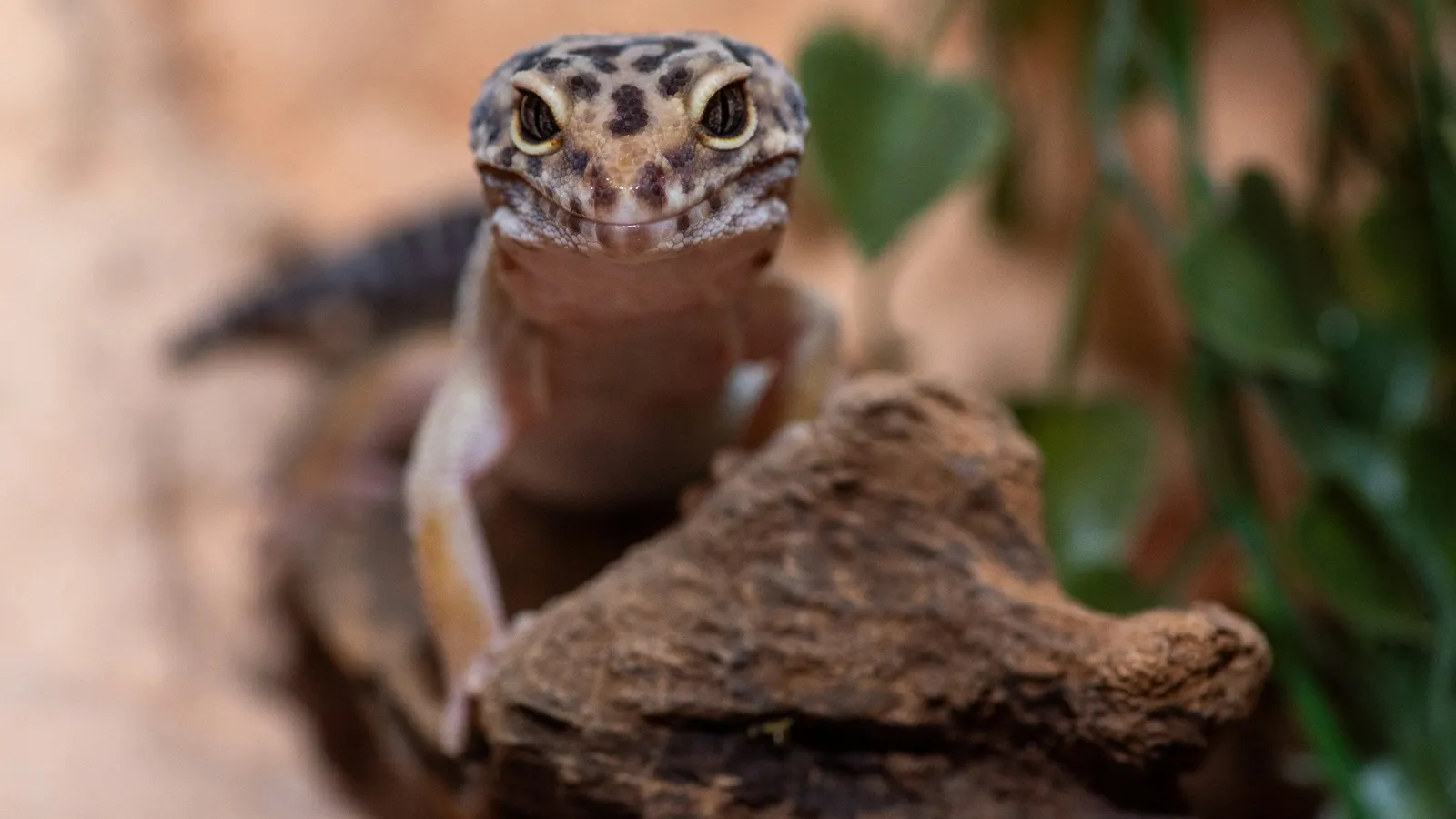
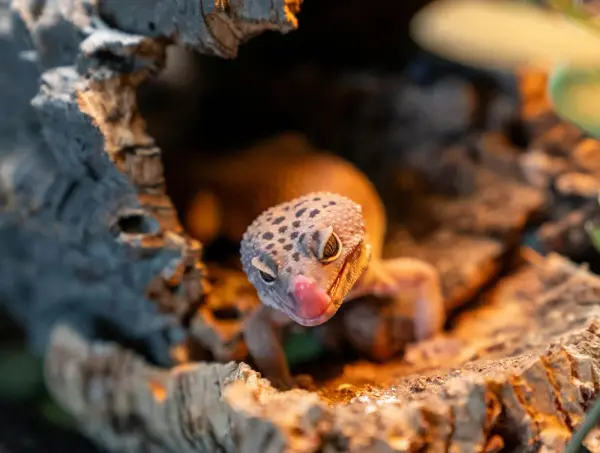
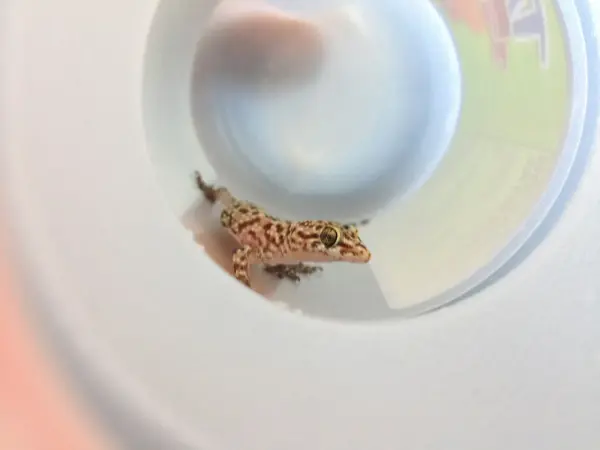
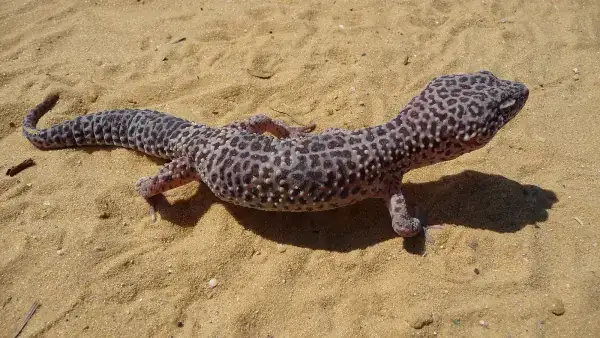
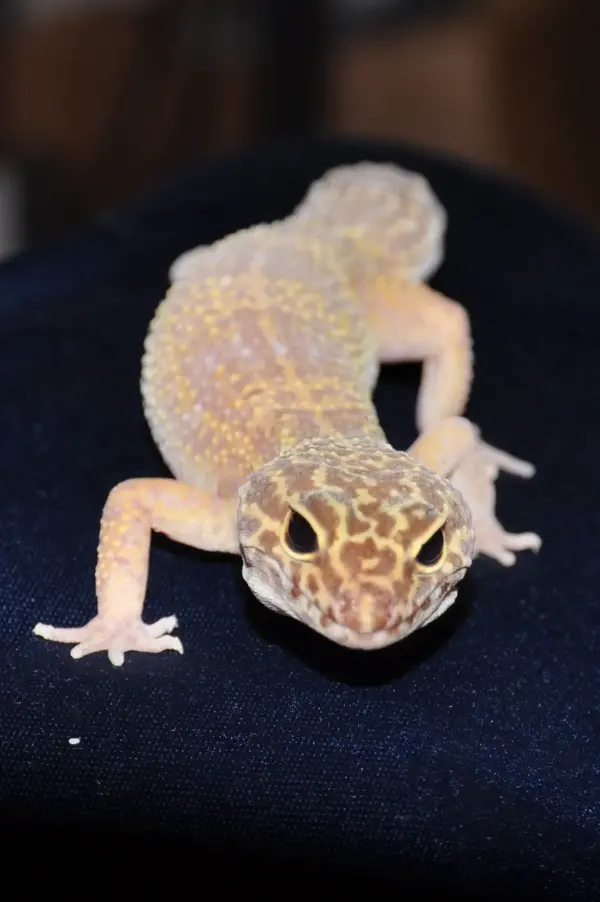
Leopard geckos (Eublepharis macularius) are one of the best first reptiles you can keep. They come from the dry, rocky grasslands of Pakistan, Afghanistan and northwest India, stay a manageable 7–10 in (18–25 cm) long, rarely bite, and are most active at dawn and dusk, which suits most people's evenings. They can also live 15–20 years or more, so a good setup on day one pays off for a long time.
This guide covers everything a new keeper needs: the enclosure, heat, lighting, humidity, diet, supplements and the health checks that catch problems early.
Choosing a healthy leopard gecko
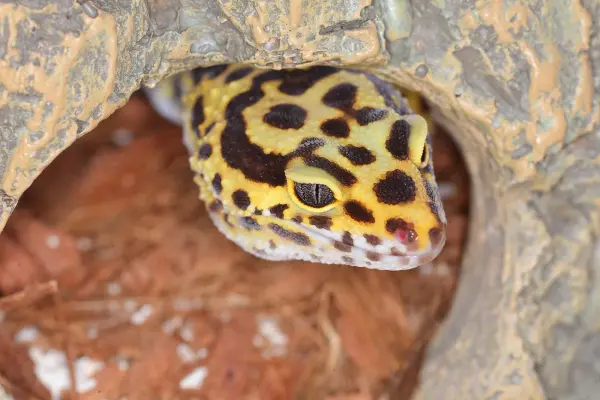
Start with a captive-bred animal that is already eating well. A healthy leopard gecko has clear, bright eyes, a rounded belly and a thick tail, because leopard geckos store fat there. Its toes and tail tip should be free of stuck shed, and it should move confidently. Ask how old the gecko is, what it eats and when it last ate. Our guide to choosing a captive-bred reptile lists the questions worth asking any breeder.
Enclosure size and setup
- Size: we recommend a 36×18×18 in (90×45×45 cm) enclosure as the minimum for one adult. Juveniles can use the same enclosure from the start, as long as there is plenty of cover so they feel secure.
- Front-opening glass or PVC: front doors are easier for daily care, and a gecko is less stressed when you reach in from the side rather than from above. A Leopard Gecko Complete Starter Kit bundles the enclosure with matched heating and lighting.
- Housing: keep leopard geckos alone. Two males will fight, and pairs or groups need experienced management to avoid stress and constant breeding.
Substrate
For adults, a loose mix of organic topsoil, play sand and a little clay lets geckos dig and holds a gentle humidity gradient. An arid bioactive substrate works well too. For juveniles, quarantine or a gecko that is underweight, paper towel makes it easy to monitor droppings and food intake. Avoid calcium sand and walnut shell, which can be swallowed and cause impaction.
Hides and decor
Provide at least three hides:
- A warm hide over the basking area.
- A cool hide at the opposite end.
- A humid hide packed with damp sphagnum moss. A humid hide cave is the single most useful tool for clean, complete sheds.
Add flat rocks, cork bark and a few sturdy artificial or live plants so the gecko can climb a little and always has cover. A shallow water dish should be available at all times.
Heat and temperature
Leopard geckos are ectotherms: they warm up and cool down by moving between warm and cool areas. That temperature gradient is essential for digestion and immune function.
| Zone | Target |
|---|---|
| Warm-side surface (under the basking light) | 88–92°F (31–33°C) |
| Warm-side air | 80–85°F (27–29°C) |
| Cool side | 72–78°F (22–26°C) |
| Night | Can safely drop to 65–70°F (18–21°C) |
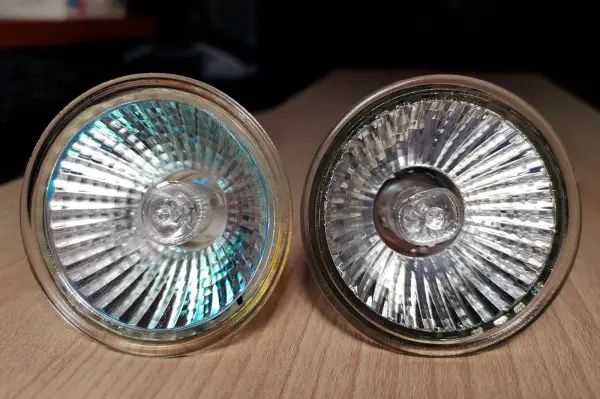
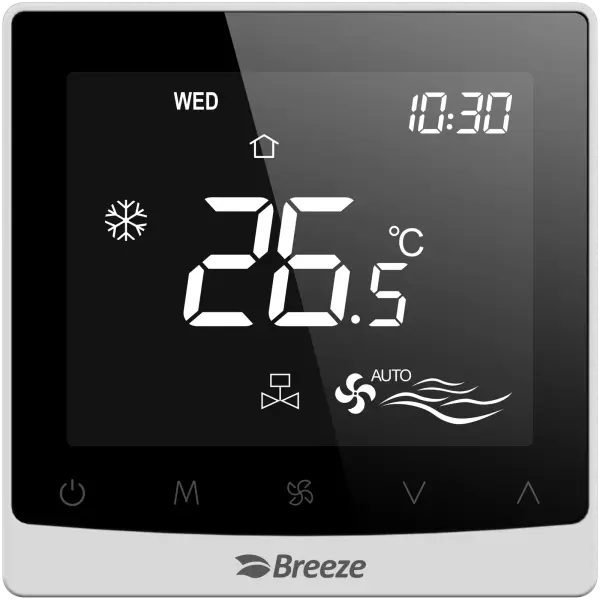
The most natural heat source is overhead light and heat, which warms rocks and the ground the way the sun does. A 50 W halogen basking bulb in a dome fixture is usually plenty for this enclosure size. Always run heat sources through a thermostat: a dimming thermostat is the right match for bulbs.
Check temperatures with a digital probe thermometer and an infrared thermometer, which reads surface temperature directly. Stick-on dial thermometers are often off by several degrees. Our reptile heating guide explains thermostat types and safe placement in detail.
Lighting and UVB
Leopard geckos can survive without UVB if they get dietary vitamin D3, but most keepers and vets now recommend low-level UVB. It supports natural vitamin D3 production and behavior. Use a 5–6% linear T5 or T8 tube across one-third to one-half of the enclosure, on the warm side, so the gecko can choose between light and shade. Run lights for about 12 hours a day on a timer and turn everything off at night.
If UVB is new to you, read UVB lighting explained before you buy, because distance and mesh make a big difference to how much UV reaches the animal.
Humidity
Leopard geckos need relatively dry air, around 30–40%, with the humid hide providing a damp microclimate. Damp substrate across the whole enclosure, or a constantly wet humid hide that never gets refreshed, can lead to skin and respiratory problems. Re-moisten the moss in the humid hide every few days.
Diet and feeding
Leopard geckos are insectivores: they eat live insects only, not fruit or vegetables.
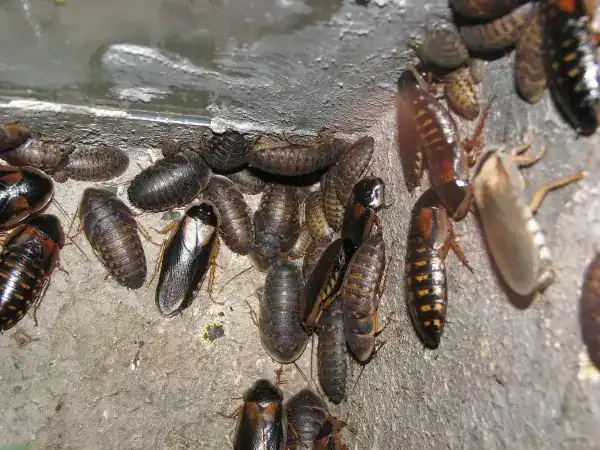
- Staples: dubia roaches, crickets and black soldier fly larvae. Live dubia roaches are easy to keep, don't chirp and are rich in protein.
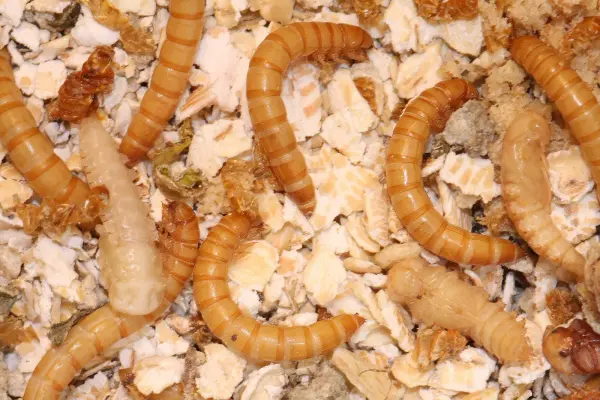
- Treats: mealworms, superworms and hornworms add variety but shouldn't be the whole diet.
- Prey size: insects no longer than the space between the gecko's eyes.
- Gut-loading: feed the insects a nutritious diet for 24–48 hours before offering them.
| Age | How often | How much |
|---|---|---|
| Hatchling and juvenile (under 6 months) | Daily | As many appropriately sized insects as eaten in 10–15 minutes |
| Sub-adult (6–12 months) | Every other day | 5–8 insects |
| Adult (over 12 months) | 2–3 times a week | 6–10 insects |
Remove uneaten crickets after the feeding session, because they can nibble a resting gecko.
Supplements
Lightly dust insects with calcium with D3 at most feedings for juveniles and every other feeding for adults, and use a reptile multivitamin about once a week. If you provide UVB, many keepers alternate calcium with and without D3. Our supplements guide explains the reasoning and the risks of overdoing it.
Handling
Give a new gecko a week to settle before handling. Scoop it up from below rather than grabbing from above, and let it walk from hand to hand close to a soft surface. Never grab the tail: leopard geckos can drop their tail as a defense, and while it regrows, the new tail is shorter and a drain on the gecko's fat reserves.
Health checklist
- Tail: a plump tail shows good body condition. A thin tail, or visible hip bones, means weight loss.
- Sheds: check the toes and tail tip after every shed, roughly every 2–4 weeks in juveniles. Stuck shed can cut off circulation.
- Weight: weigh monthly with a gram scale and note any steady loss.
- Droppings: firm brown feces with a white urate.
If you notice weight loss, swollen limbs, a bent spine or jaw, or a gecko that refuses food for more than two weeks outside of winter or breeding season, contact a reptile vet. See signs of a healthy reptile for a fuller checklist.
Frequently asked questions
How long do leopard geckos live?
With good care, leopard geckos commonly live 15–20 years, and some reach their mid-20s. Correct heat, a varied insect diet with sensible supplementation and regular weight checks all help.
Can leopard geckos live together?
It's best to keep one leopard gecko per enclosure. Males fight, and even females can stress each other or compete for food and the best hides. Housing them separately avoids these problems.
Do leopard geckos need a heat lamp at night?
No. Turn all lights off at night so the gecko has a natural day–night cycle. A night-time drop to about 65–70°F (18–21°C) is healthy. If your home gets colder than that, add a non-light heat source such as a ceramic heat emitter on a thermostat.
Why is my leopard gecko not eating?
Common causes are a basking spot that is too cool, recent rehoming, an upcoming shed, or a seasonal slow-down in winter. Check temperatures first. If an adult refuses food for more than two weeks or loses weight, book a reptile vet visit.
About the author: ScaleHaven Care Team
Reptile keepers and breeders at ScaleHaven Reptiles
Our care team raises and looks after every animal we sell, from hatchling to shipping day. We write these guides from the husbandry we use in our own facility, and we review them as best practice evolves. For health concerns, always consult a qualified reptile veterinarian.